
People ask how long does a dental clean take? because they want a straight answer before they book. Fair enough. Most people are trying to fit it around work, school pickup, meetings, or the usual chaos of the week. The short version is that a standard clean often sits somewhere around 30 to 60 minutes, though the real answer depends on what’s going on in your mouth when you walk in.
A quick routine visit for someone who stays on top of their dental care usually moves faster than an appointment where there’s more plaque, tartar, staining, gum inflammation, or a long gap since the last visit. Some cleans are simple maintenance. Others turn into a bit more of a reset.
A routine clean is usually quicker
If someone comes in regularly and there’s not much build-up, the appointment can be pretty straightforward. The dentist or hygienist removes plaque and tartar, checks the gums, polishes the teeth, and gives any advice needed for home care. In those cases, the clean tends to move along without much fuss.
That’s why regular visits often feel easier. Less time in the chair, less scraping, less discomfort, and usually less catching up to do.
Build-up changes the pace
Once tartar has had time to settle in properly, the clean takes longer. There’s simply more work involved. Heavy staining can add time too, especially around the lower front teeth or in the spots people tend to miss when brushing.
If the gums are inflamed or bleeding easily, the appointment may need a gentler approach. The clinician may also spend more time checking gum health and explaining what’s happening. Nobody loves hearing that they’ve left it a bit too long, but it’s common enough, and it usually just means the clean needs more attention.
Gum health can make a big difference
A standard clean and a more involved periodontal clean are not the same thing. If there are signs of gum disease, deeper pockets, or infection around the gums, the appointment may take longer or be split across multiple visits.
That’s where people sometimes get caught out. They’ve booked expecting a quick polish and leave realising there’s more treatment ahead. It doesn’t mean something dramatic has happened overnight. Often it’s the result of build-up and inflammation creeping along quietly in the background.

New patients often need more time
First appointments can run longer because there’s more to cover. The clean itself may not be hugely different, but there’s often a full check-up, history, X-rays if needed, and a broader look at the condition of the teeth and gums.
That wider picture helps the clinic work out whether the patient only needs a standard scale and clean or whether there’s something else going on that needs attention. So if a first visit feels longer than expected, that’s usually why.
Some people just need more breaks
Not everyone breezes through a dental clean. Some people have sensitive teeth. Some have very sore gums. Some are anxious the minute they sit down. Some just hate the scraping sensation and need a breather halfway through.
A good clinic adjusts for that rather than rushing through it. If someone needs pauses, reassurance, or a slower pace, the appointment can stretch a little. That’s not a bad thing. Most people would rather spend a bit longer in the chair than feel like the whole thing was done at full speed while they were gripping the armrest.
Home care shows up pretty quickly
Dentists can usually tell who’s been doing the basics well at home. Brushing technique, flossing, how much plaque is sitting around the gumline, whether staining is building up; it all shows itself pretty fast.
People who keep on top of those habits often end up with shorter, easier cleans. People who don’t usually need more work done in the chair. Not exactly shocking, but it does answer part of the timing question. A lot of the appointment length is decided before someone even walks through the door.
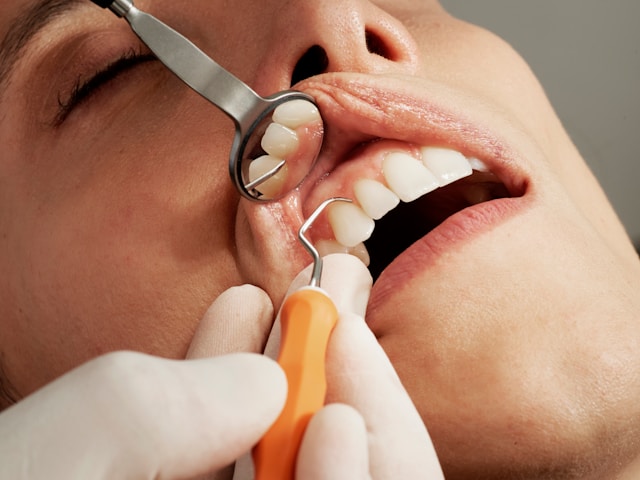
Staining can add a bit of time too
Tea, coffee, red wine, smoking, and certain foods can all leave visible staining that takes extra effort to remove. Some people are mainly coming in for that fresher, cleaner look and feel, only to find the polish side of the appointment takes a little longer because the stains are hanging on more than expected.
It’s usually not a huge drama, though it can turn a quick maintenance clean into something a bit more involved.
The clean is only part of the visit
People sometimes imagine the appointment as one continuous scaling session, but there’s usually more happening. The clinician may check for decay, look at old fillings, assess gum health, discuss sensitivity, review any pain or concerns, and talk through what should happen next.
That’s a good thing. Most people don’t really want a rushed clean with no explanation and no proper look at the bigger picture. Still, it does explain why the visit can feel longer than the words “dental clean” suggest.
So how long should you allow?
For most people, allowing about an hour is the safest bet. If the clean ends up being simpler, great, you get a bit of time back. If there’s more build-up, more discussion, or a first-time assessment involved, you’re not stressed about racing out the door halfway through.
That’s usually the most useful way to think about it. A dental clean can be quick when things are in good shape. It can take longer when there’s more to deal with. Either way, the appointment tends to be far easier when it’s part of a regular routine rather than a once-every-few-years act of optimism.